Cargo Recognition
Know exactly what's in the load space
Always know what's on board
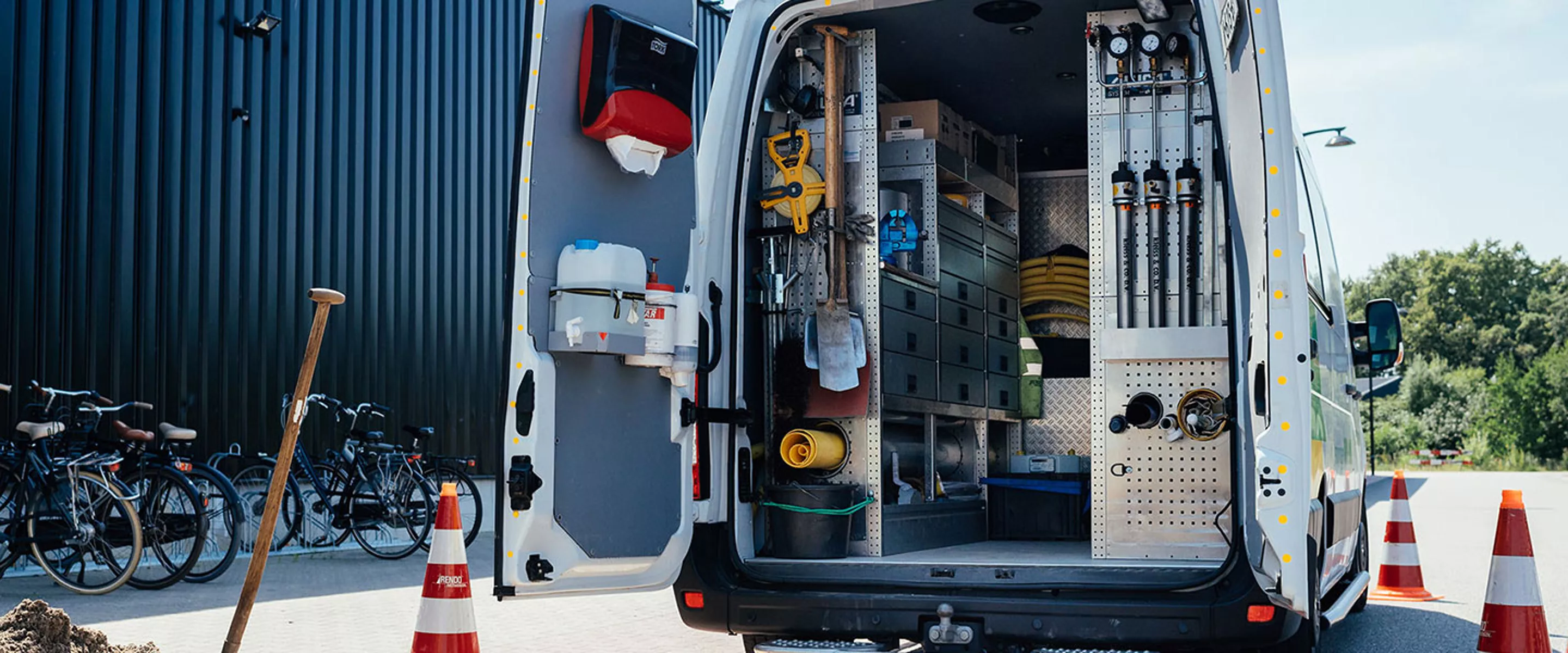
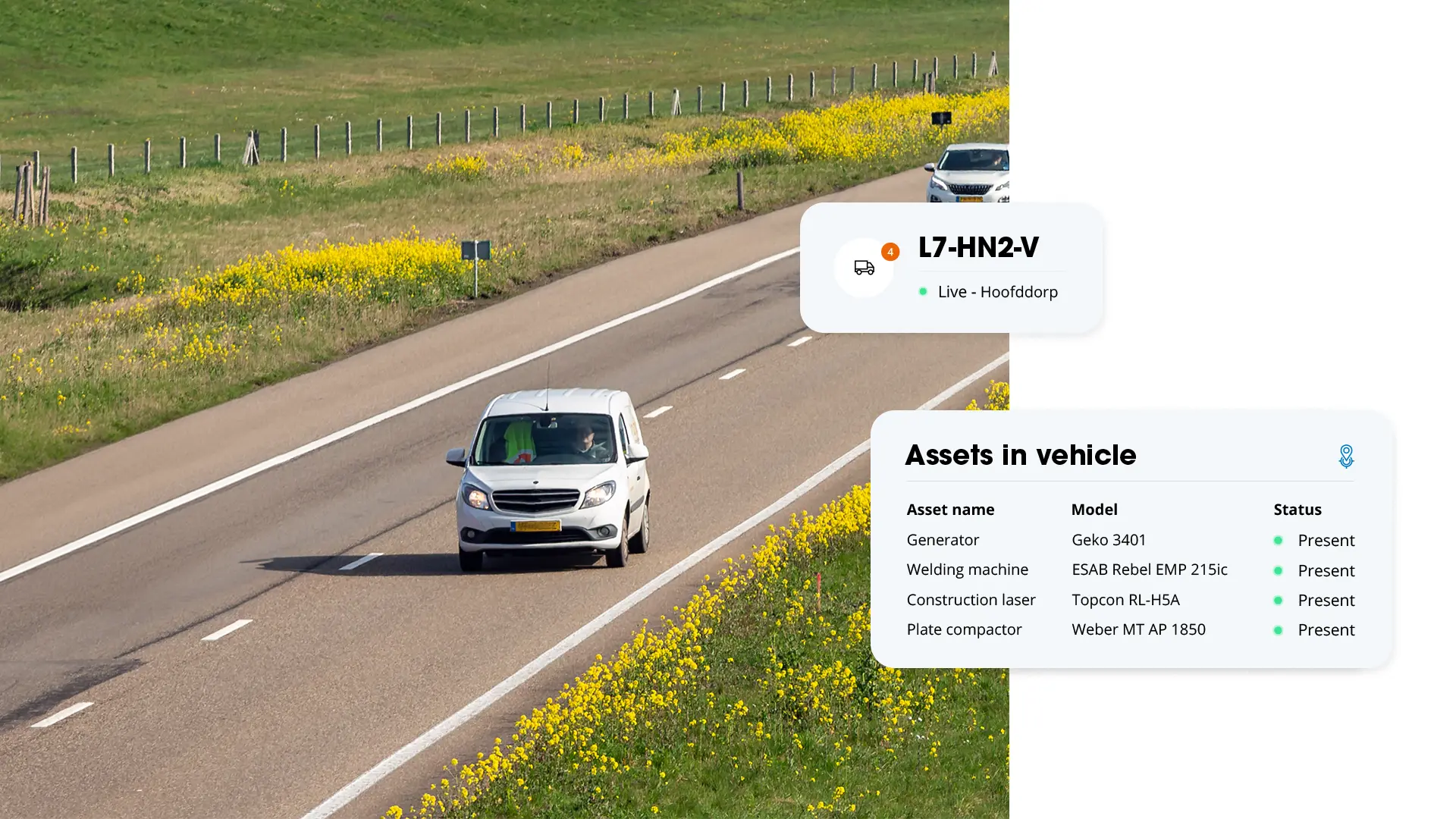
With asset tracking you know where your equipment is. With the vehicle tracking system you know where your vehicles are driving. Cargo recognition adds a layer to that: you also know which vehicle your equipment is travelling with. A GPS-Buddy RFID tag on every piece of equipment, and the XT-4 gateway automatically recognises what's on board, in the vehicle, on the trailer or on the low-loader. No scanning, no extra action for the driver.
2,000+ market leaders trust our technology


The blind spot: cost of failure
The fleet is usually well in view: which vehicles there are, where they're driving, who's in them. What's in the load space, on the trailer or on the low-loader at any given moment is a different story. Equipment is constantly moving between projects, crews and vehicles. That makes it hard to know where everything is at any given moment. The consequences are similar across many organisations:
- A vehicle leaves without all the equipment needed for the job.
- A driver has to go back for equipment that's already somewhere else.
- Equipment gets rented or bought again while it's already somewhere in the organisation.
- Equipment gets left behind at a location.
In the worst case, an entire crew is at a standstill because the work depends on one piece of equipment that can't be found. Those invisible costs of failure add up quickly. One explanation: knowing what's on a specific vehicle has always required an extra step until now, such as a gate you have to pass through, a handheld scanner, or a phone nearby. Whenever a system depends on that kind of extra step, it doesn't happen consistently every time. That makes the registration less reliable.
How cargo recognition works
Cargo recognition works in three steps.
- Tag what you want to track. You attach a GPS-Buddy RFID tag to every piece of equipment you want visibility on: from generator to drill, from plate compactor to cable reel.
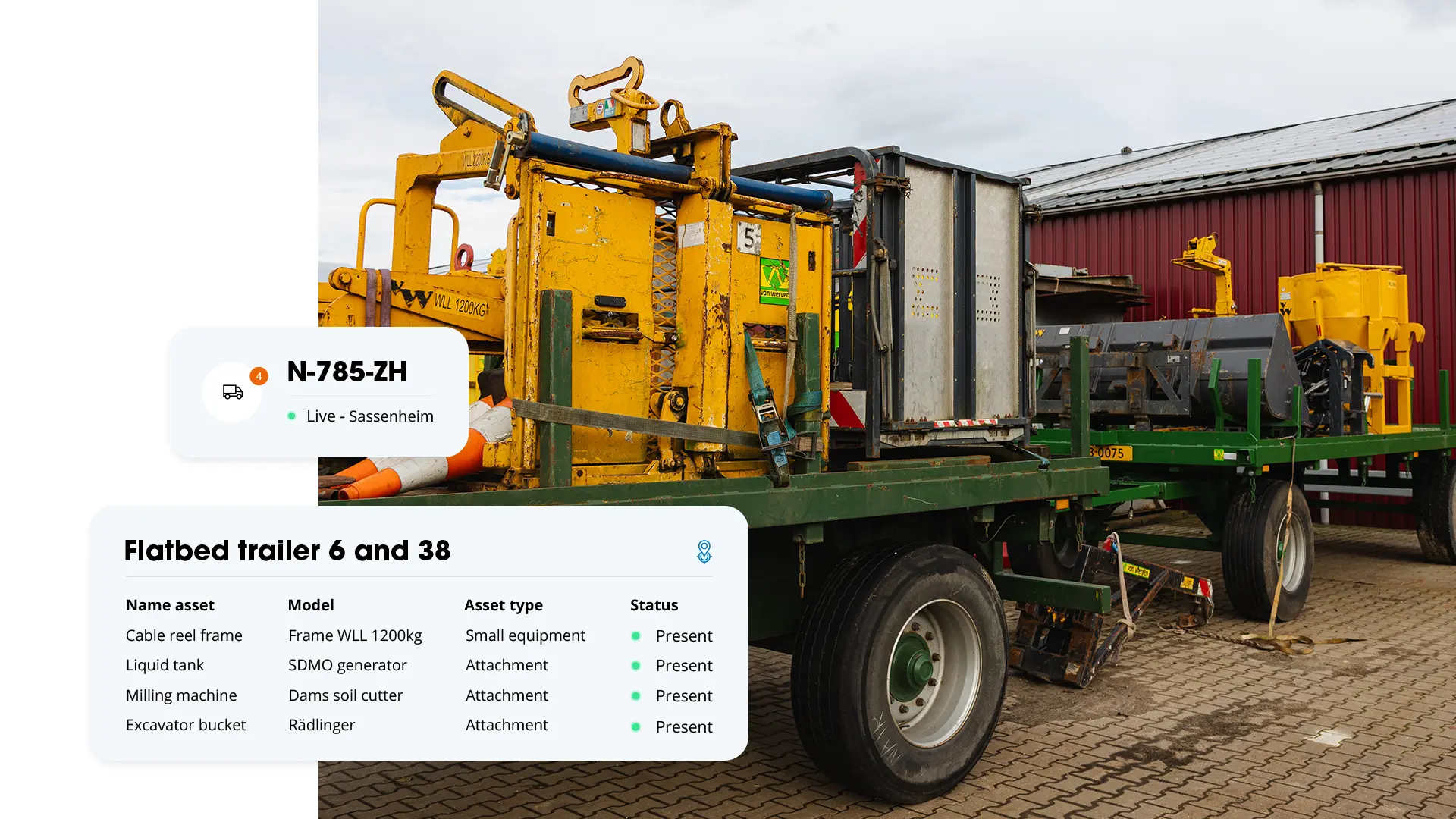
- The XT-4 gateway recognises the equipment. Using smart logic, the gateway recognises what's in the vehicle, on the trailer or on the low-loader. This is matched and sent back to Flowter in real time.
- You see it per vehicle in Flowter. Equipment that belongs permanently to one vehicle, you link to that specific vehicle. Equipment that rotates between projects and crews, you leave to be recognised freely.
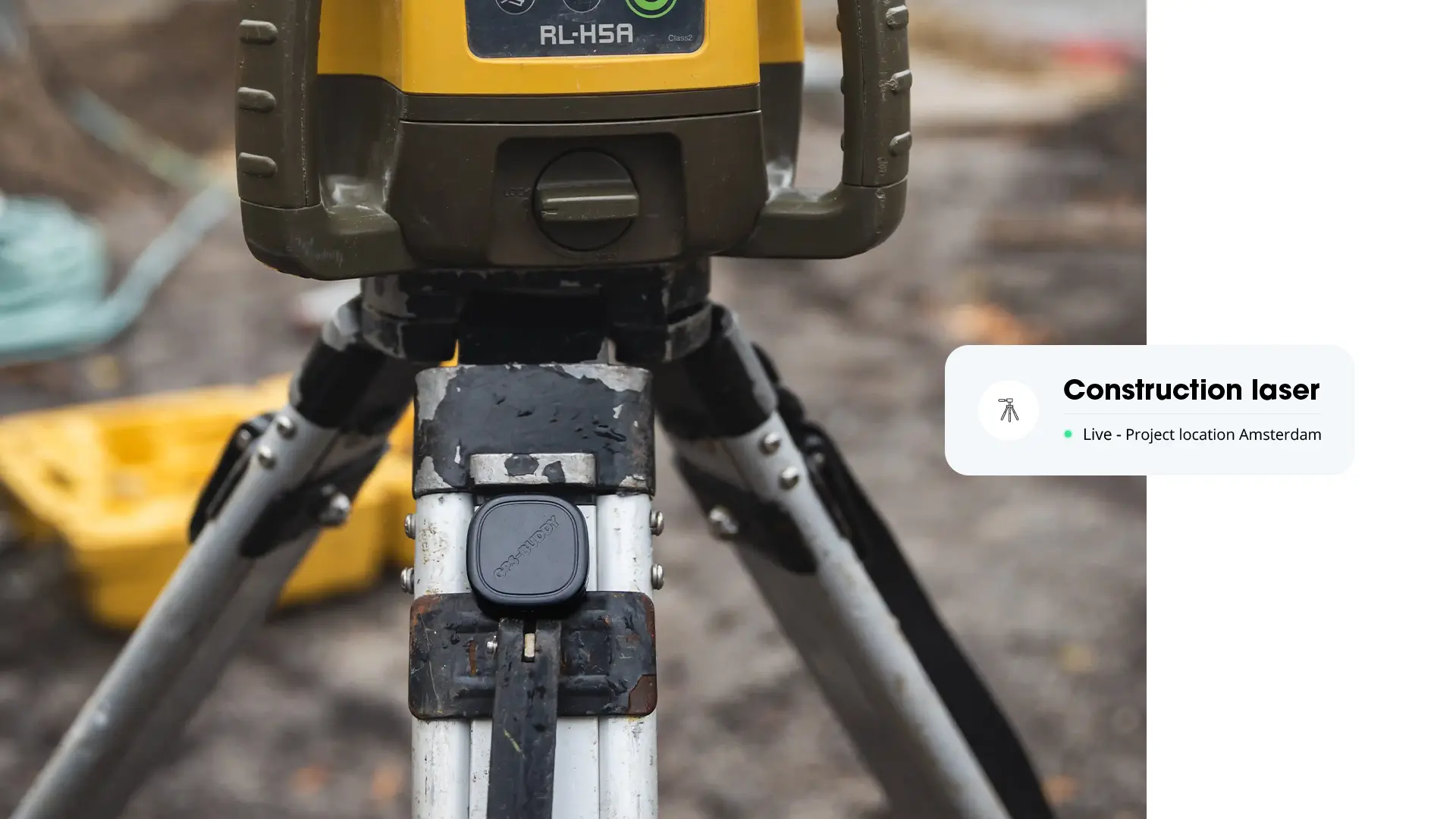
The technology behind the Asset Tag
What makes this possible now is the revolutionary technology in the Asset Tag. RFID technology means: no expensive GPS module, no SIM card, no heavy battery. The tag transmits on its own, on its own battery. The gateway picks up the signal and sends it to Flowter. Thanks to this smart technology, a single tag's battery lasts up to 8 years.
The signal is also in a different league than, for example, Bluetooth alternatives. Our standard tags have a signal that easily reaches ten times the distance of an industrial Bluetooth signal. That matters, because it also makes the signal penetrate steel, concrete and glass more easily. Exactly the materials you deal with in the field, and where normal signals fall short.
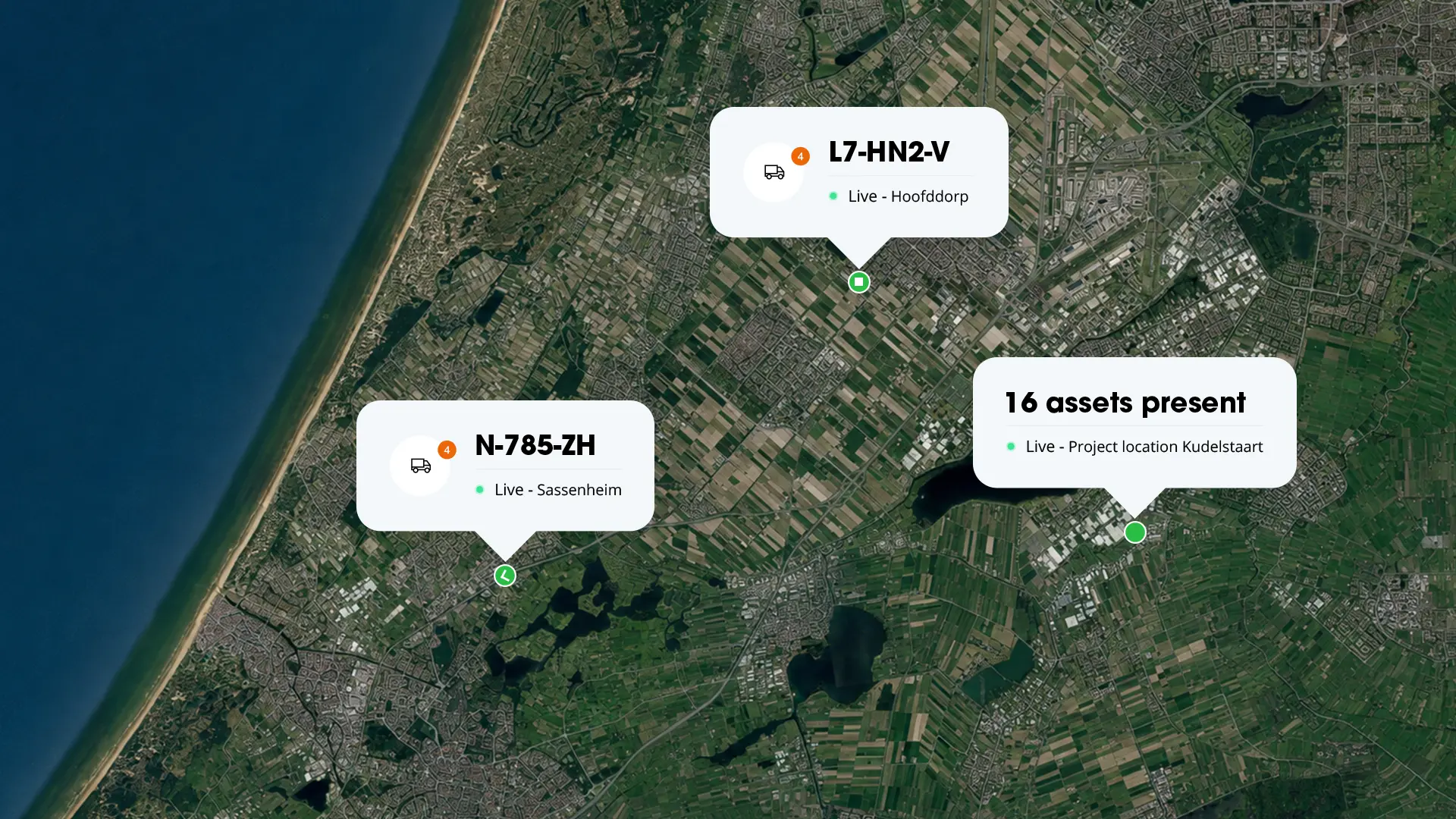
When cargo recognition works for you
The technology is the same for everyone. What you get out of it differs per industry.
- Do you work with equipment across different projects? Then you immediately see which vehicle carries which piece of equipment, and which location it's at now. No more calling around to find a grab or a generator. Equipment left behind after handover, you see straight away, not days later.
- Does your crew drive to a different construction site every day? Then you see per vehicle what's being loaded, and whether too much or too little has been loaded.
- Do you drive a truck to a customer to unload? Cargo recognition automatically recognises which equipment is in which trailer, semi-trailer or truck. So you see before departure whether everything is on board.
- Do you work in service, with multiple jobs a day? Then every trip you don't have to make is pure profit. A technician no longer shows up on-site without the right equipment.
Getting started with cargo recognition
Do you already have XT-4s built into your vehicles? Then getting started is simple: you tag the equipment you don't want to lose track of, that you want to gather insight on, and that you want to know which vehicle it's travelling with. Not yet familiar with our solutions? Request a demo, and we'll show you how cargo recognition fits your fleet.
Read more about GPS-Buddy's cargo recognition
Frequently asked questions and answers. Is your question not listed? Feel free to contact us.
Do I need an XT-4 to use cargo recognition?
The XT-4 gateway in the vehicle recognises the RFID tags and sends the data to Flowter. If your vehicles are already equipped with an XT-4, getting started with cargo recognition is simply a matter of placing tags.
How long does an RFID tag last?
Up to 8 years on its own battery, without a SIM card and without a GPS module.
Can I permanently link equipment to one vehicle?
Equipment that structurally belongs to one vehicle, you link permanently. Equipment that rotates between projects and crews, you leave to be recognised freely by every gateway that picks up the signal.