Tachograph Management
Automatic tachograph reading
Attention: new tachograph regulations from July 2026
Since 1 July 2026, the tachograph requirement has been extended. Until then, this obligation mainly applied to heavier vehicles, but it now also applies, under certain conditions, to vehicles from 2.5 tonnes. Non-compliance can lead to fines, vehicle downtime and issues during inspections.
Want to be sure whether this applies to your vehicles?
Take our free Tachoscan. Our specialists assess, based on your situation and vehicles, whether you need to take action. Fully aligned with the new regulations.
Remote tachograph reading, securely stored
The law requires timely reading and retention of tachograph data. This can be done fully automatically and remotely. Tachograph management is part of Flowter, the GPS-Buddy platform, and automates the entire process. The vehicle's mass memory and the driver card are read remotely and stored securely. This keeps the download obligation in order, makes driving and rest times visible, and ensures files are immediately available during an inspection.
Benefits at a glance
Automatic downloads
Mass memory and driver card are read remotely and fully automatically. No manual work, no vehicle downtime.
Overview and signalling
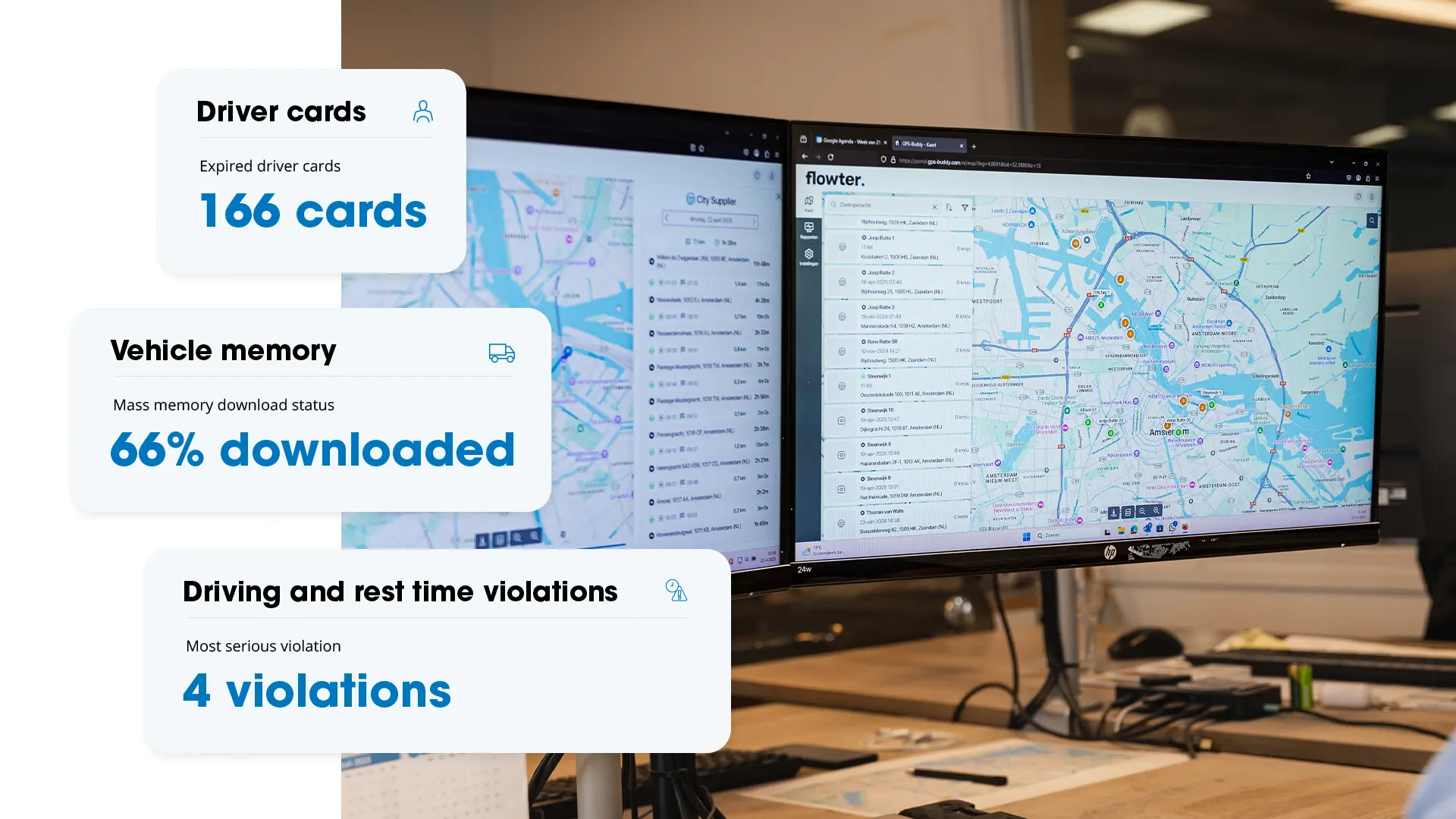
Download status, expired cards and driving and rest time violations in one overview.
Secure storage
Tachograph files are retained for seven years. Files are directly shareable with clients or authorities.
Automatic and remote reading
The digital tachograph is read fully automatically and remotely, regardless of where the vehicle is located. Both the vehicle's mass memory and the driver card are downloaded digitally. This also works with rotating drivers, temporary drivers or external trips. If a driver is missing from a trip, they can be added retroactively, keeping the archive complete.
2,000+ market leaders trust our technology


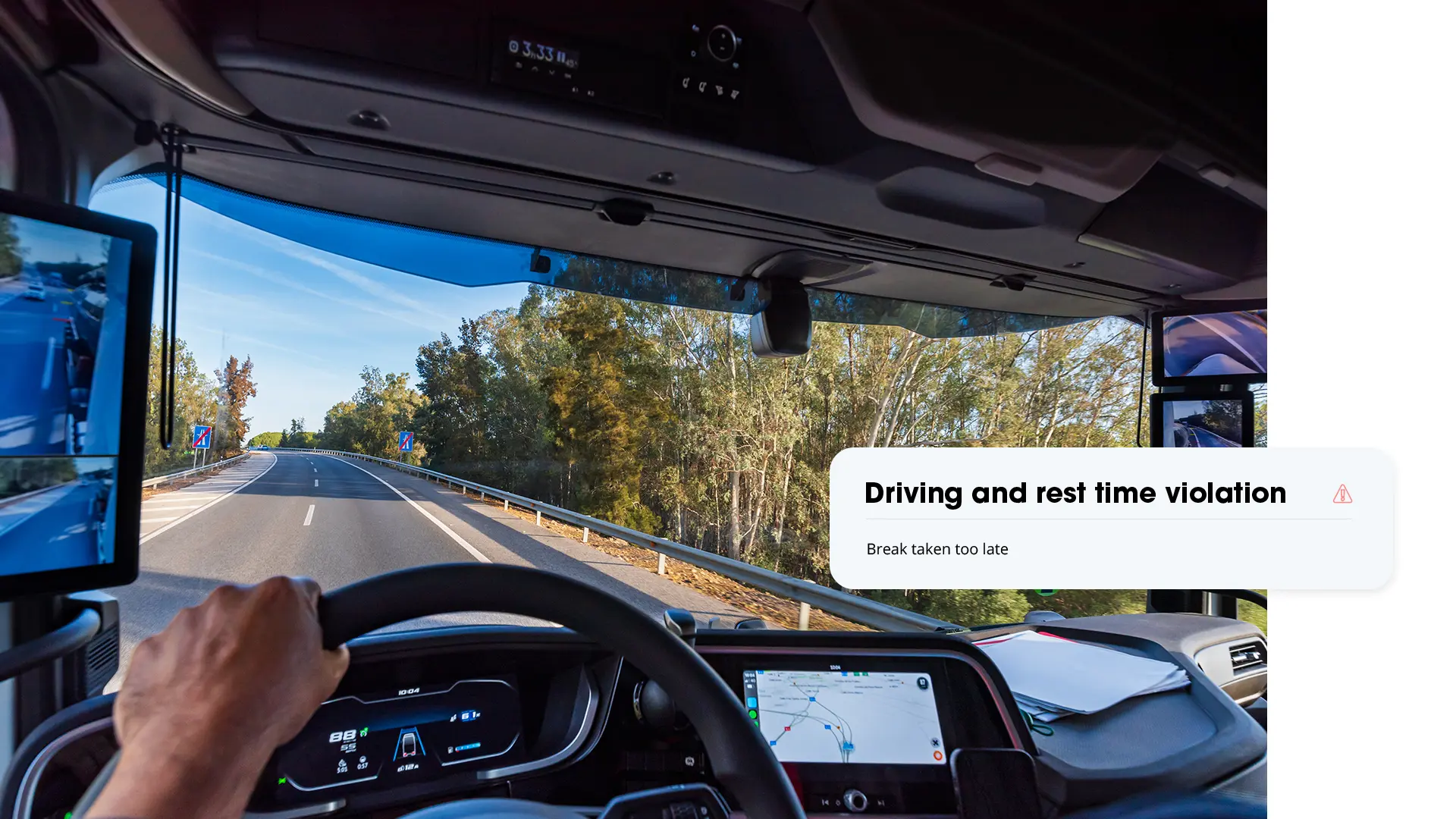
Insight into driving and rest times
Tachograph analysis shows at a glance whether data is complete and correct. Download status of driver cards and vehicles, and expired cards, are directly visible, with an alert when a download deadline is exceeded.
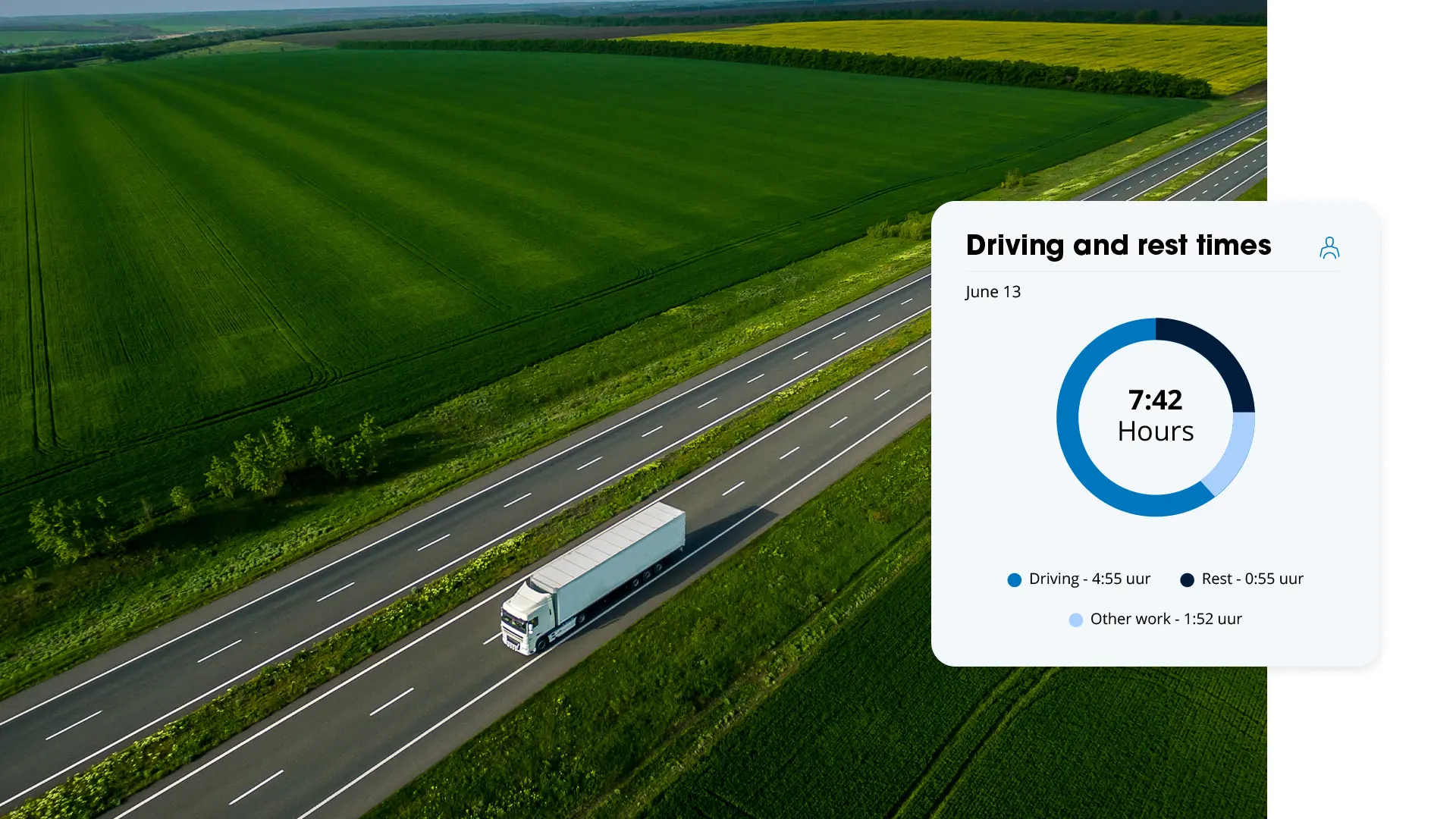
After reading, it's visible per driver, per day and per month how driving time is made up: driving time, other work, breaks, rest and unknown time. Deviations from driving and rest times are classified into minor, serious, very serious and most serious violations, with a concrete description such as "break too late" or "more than 10 hours of daily driving time." This makes it clear at a glance where attention is needed.

Automatically generated infringement letters
In the event of driving and rest time violations, both the driver and the employer can be fined. ILT monitors this during company inspections. Flowter automatically generates infringement letters based on tachograph data, which serve as a basis for a conversation with the driver. The letters can be sent via connected systems. This increases awareness around driving and rest times and reduces the risk during inspections.
Related solutions


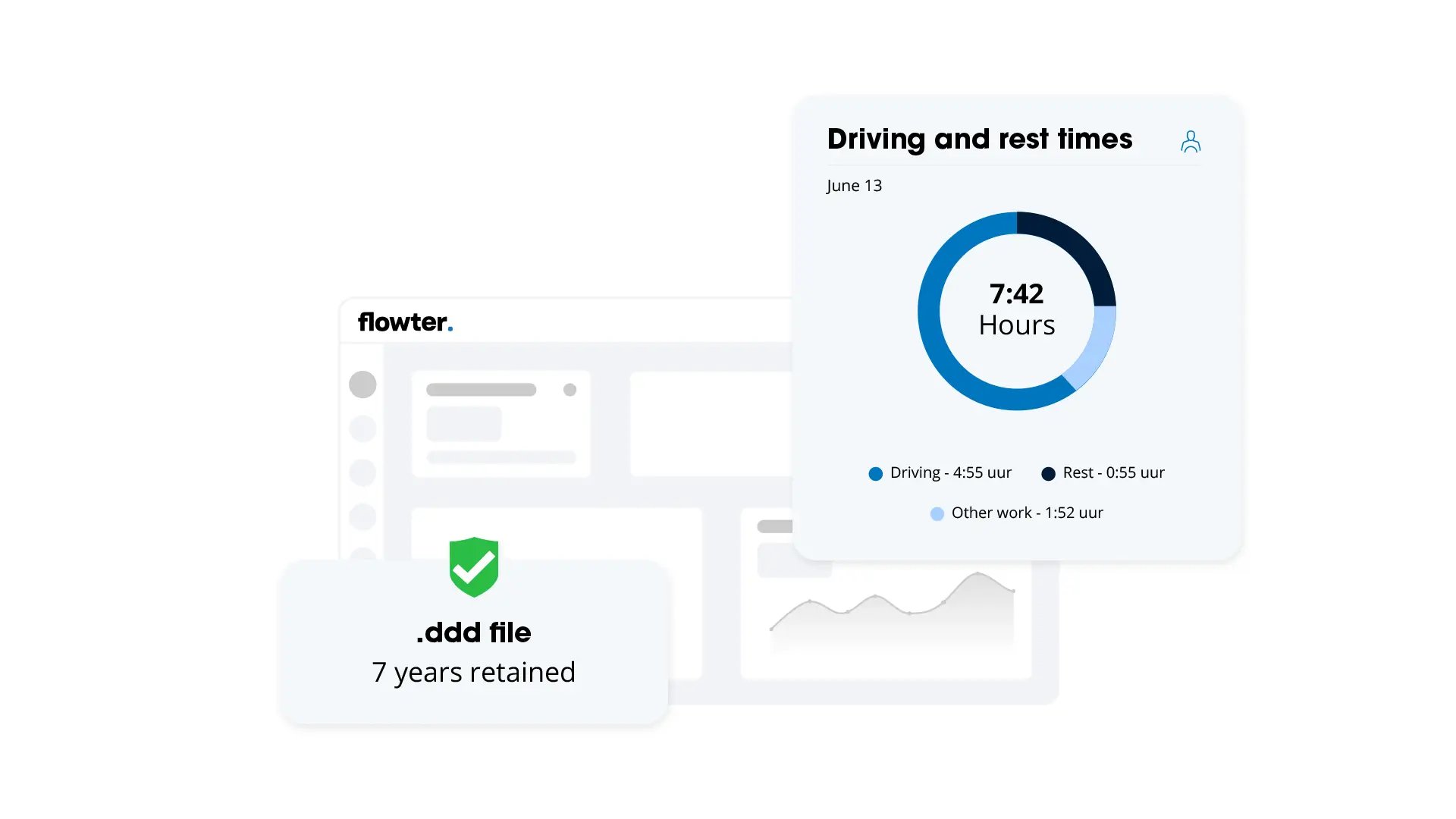
Seven years securely stored, always available
All .ddd files from driver card and vehicle are stored automatically. Files are retained for seven years, so older data remains available. During an inspection, the data is ready to share immediately.
From tachograph data to complete oversight
Tachograph management is one of the solutions within the GPS-Buddy platform. Tachograph data comes together in Flowter alongside other solutions, such as Trip Registration, Emission Reporting, Driver Intelligence and Asset Tracking. Driving and rest times are not isolated, but form part of the complete picture of vehicles, machinery, people and equipment. Everything that moves, visible in one platform.
Real impact for our customers
From smart deployment of equipment to seamless collaboration between people and vehicles, our customers show what it delivers when everything comes together in one ecosystem. Read how they turn downtime into direction, and fragmentation into focus.
From physical reading to central administration
At Van de Kreeke Groep, tachographs used to be read physically on a regular basis, a process that took time and was prone to errors. With GPS-Buddy's digital tachograph integration, data is now downloaded automatically and remotely. No more extra trips, no disrupted planning, and no risk of missing data. Administration runs centrally, as part of the same platform where equipment, machinery and CO₂ reporting also come together.

from physical reading to fully remote
At Huuskes, a foodservice specialist for the care sector, an employee used to have to go out regularly to physically read the tachographs. That took time and planning, and always carried the risk that a vehicle wasn't at the right location at the moment of reading.
With GPS-Buddy's tachograph integration, this process now runs automatically and remotely. Administration takes place from the office, without extra trips, and with direct insight into which driver is using which vehicle.
"We use the digital tachograph integration because we no longer need to send someone out to read the tachographs every time. We can now simply download that information from the office. This allows us to meet our legal obligations efficiently. It also lets us know which driver is driving which vehicle."

9% jaarlijkse brandstofbesparing
Lorem ipsum dolor sit amet, consectetur adipis cin elit. Nunc purus libero, interdum sed blandit acp retium facilisis turpis. Donec dictum neque veloran tristique egestas nulla mollis dui lorem dolor. Lorem ipsum dolor sit amet, consectetur adipis cin elit. Nunc purus libero, interdum sed blandit acp retium facilisis turpis.
Lorem ipsum dolor sit amet, consectetur adipis cin elit. Nunc purus libero, interdum sed blandit acp retium facilisis turpis. Donec dictum neque veloran tristique egestas nulla mollis dui lorem dolor. Lorem ipsum dolor sit amet, consectetur adipis cin elit.

Frequently asked questions about tachograph management
Frequently asked questions and answers. Is your question not listed? Feel free to contact us.
What is tachograph management?
Tachograph management is the process of reading, storing and managing data from the digital tachograph: the vehicle's mass memory and the driver card. With GPS-Buddy, this happens automatically and remotely, so the data is always available to meet the legal reading and retention obligations.
What is a tachograph?
A tachograph is a recording system that is required by law to be installed in certain vehicles. The device accurately records the driver's driving and rest times, as well as certain vehicle activities. These records are subject to a legal reading and retention obligation.
Why is automatic reading important?
Manual reading takes time and requires discipline: someone has to keep track of when each driver card and mass memory is due. With GPS-Buddy, reading happens automatically and remotely, without the vehicle needing to stop.
How long is tachograph data retained?
By law, tachograph data must be retained for at least one year. GPS-Buddy retains the files for seven years, so older data also remains available.
What is a .ddd file?
A .ddd file is the legally required file format in which tachograph data is stored. Both the vehicle's mass memory and the driver card produce their own .ddd file. GPS-Buddy downloads both automatically and retains them for seven years.
How often does a tachograph need to be read?
The driver card must be read at least every 28 days, the vehicle's mass memory at least every 90 days. With GPS-Buddy, this happens automatically and remotely, without the vehicle needing to stop.
What hardware is needed for tachograph management?
The GPS-Buddy XT4 gateway is installed in the vehicle and integrates with the digital tachograph. The XT4 reads mass memory and driver card remotely. The data arrives in Flowter.
Does the tachograph obligation also apply to vehicles under 3.5 tonnes?
Yes, it’s seamlessly integrated with modules like trip registration, route optimisation, driver performance, and CANbus insights.