


Emissions Reporting
Emission reporting for CO2, NOx and NH3
Tenders, permits, clients. They all require substantiated emissions data. Flowter automatically calculates CO2, NOx and NH3 per project location and period. Based on real operating hours. The emission and reporting methodology has been independently assessed within an ISAE 3000 assurance engagement, conducted by TÜV NORD Nederland and partner Diggle BV.
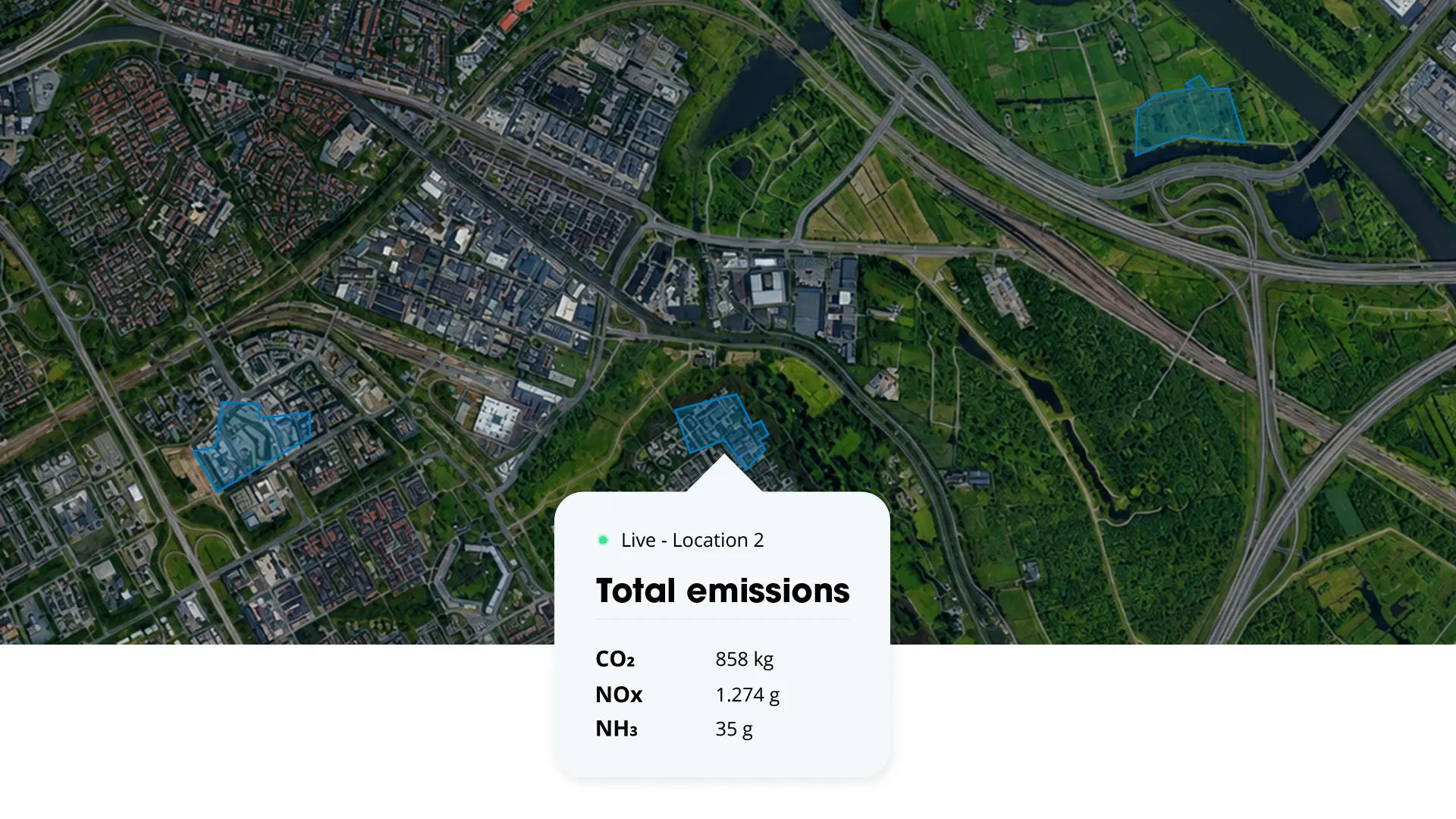
What the emissions reporting delivers
Control over emissions starts with reliable emissions data. This is what emissions reporting delivers in practice:
- CO2, NOx and NH3 per project location and period
- Reliable calculation method, suitable for tenders, permit authorities and clients
- Automatically calculated based on data directly from vehicles and machines
- Exportable in PDF, XLSX or CSV
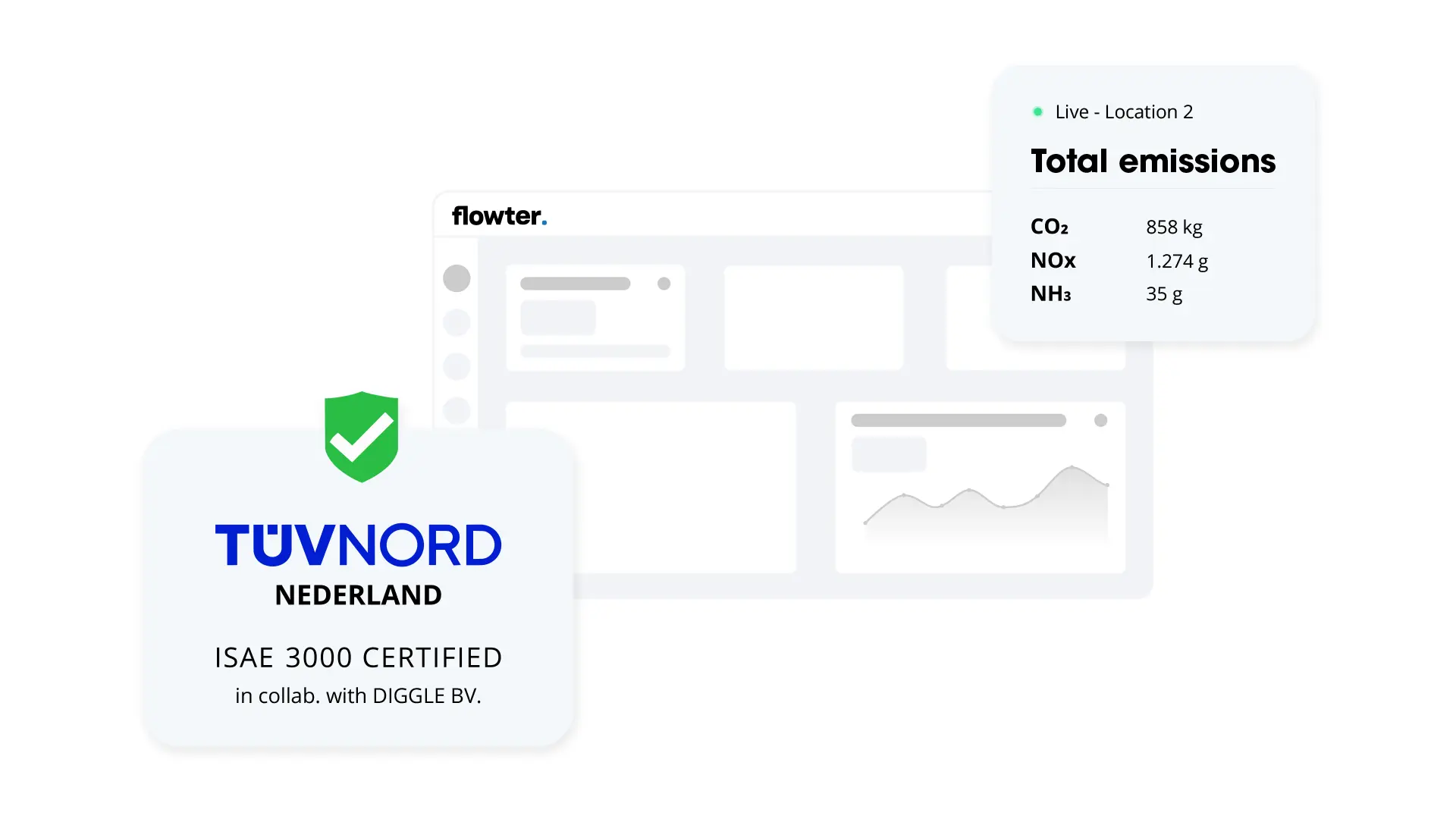
Reliable calculation method
GPS-Buddy has had its IT controls relating to the emission and reporting methodology independently assessed as part of an ISAE 3000 assurance engagement, carried out in collaboration with TÜV NORD Netherlands and its partner Diggle BV. The calculation method follows the standards used by the market and government bodies: EMEP/EEA for road transport and the current TNO calculation methods for mobile machinery.
The calculation works per asset, based on fuel type and emission group, so the figure matches what the vehicle or machine actually is. The result is an emissions report that meets what tenders, permitting authorities and clients expect.
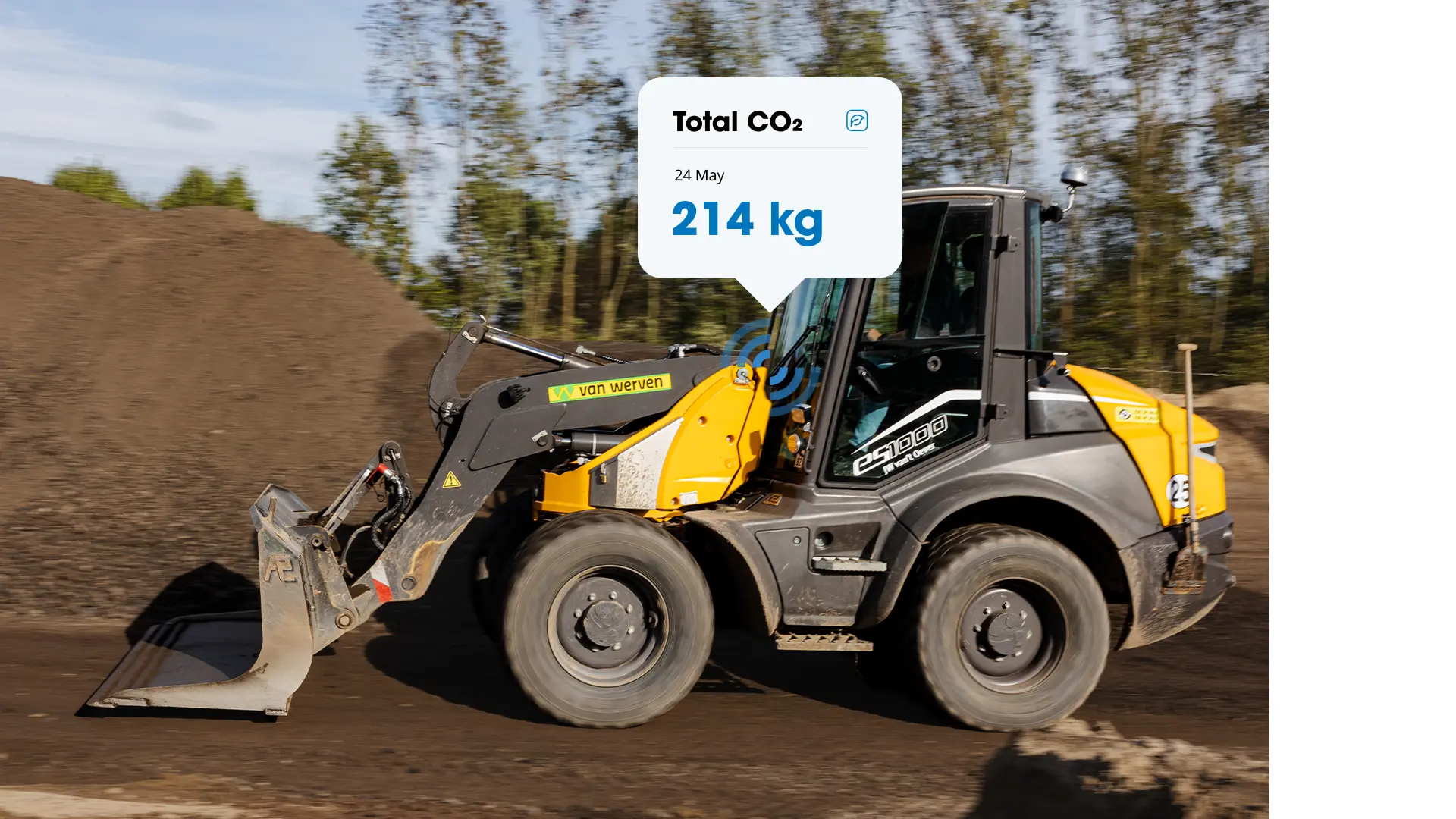
Per project location and period
Flowter automatically links emissions to project locations and a self-chosen period. Per vehicle and machine, it calculates which CO2, NOx and NH3 emissions occurred at a location. The calculation is based on actual CAN-bus data. The report is exportable in PDF, XLSX or CSV and can be shared directly with the client, auditor or permit authority. Historical data is retained, enabling reporting on closed periods.
2,000+ market leaders rely on our technology


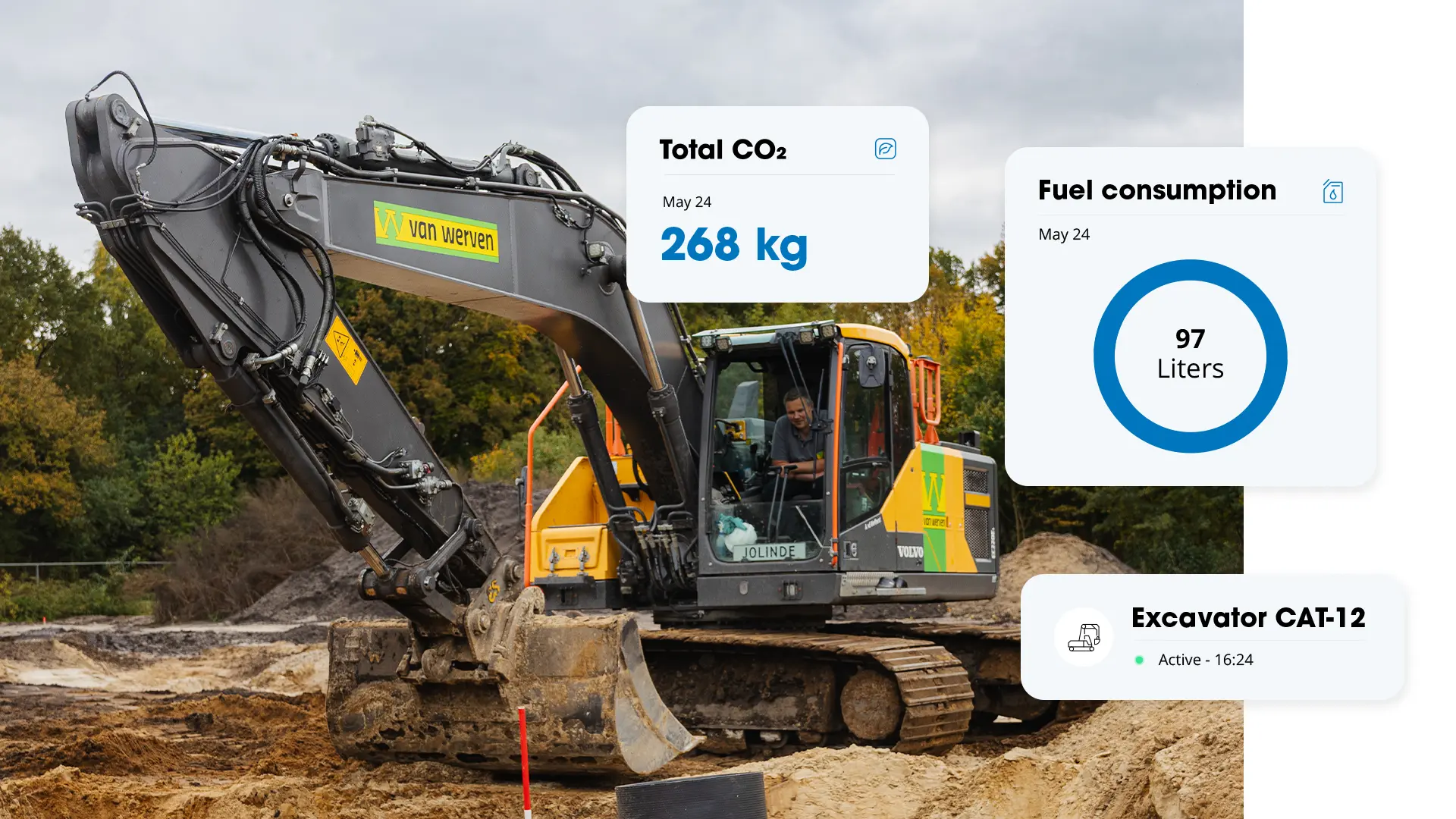
Emission reporting without extra work
Flowter provides insight into fuel consumption, operating hours, kilometres and AdBlue of vehicles and machines. The calculation method is automatically applied to that same data. The emission class per vehicle or machine is automatically included in the calculation. Changes to vehicle characteristics are immediately reflected in new reports. The result is an emission report that is available without additional input or manual steps. Based on actual operating hours and CAN-bus data.

Asset data. Converted into substantiated emissions figures
Tenders, nitrogen dossiers and reporting obligations from clients place demands on emissions reporting. Flowter automatically converts data from vehicles and machines into emissions figures, calculated on the basis of actual operating hours and an independently assessed calculation method. Per project location, per period. Ready to submit to your client, auditor or permit authority.
Read more about Emissions reporting
Frequently asked questions and answers. Is your question not listed? Feel free to contact us.
Who is the emissions reporting in Flowter intended for?
or construction companies, contractors and carriers that want to take their emissions seriously. With insight as the starting point and demonstrable results as the goal. The emission figures are directly usable in tenders, with permit authorities and with clients.
What is the advantage of emissions reporting through Flowter?
Flowter calculates CO2, NOx and NH3 automatically based on data from vehicles and machinery. The calculation method has been independently assessed within an ISAE 3000 assurance engagement. The report is immediately available per project location and period, without manual steps or additional systems.
What can I use the reports for?
The reports can be used for tenders that require emission substantiation, for permit authorities that request NOx and NH3 per project location, and for clients that need Scope 3 data for their own reporting obligations. They are also suitable for carriers that need to provide CO2 figures per trip or per client contract.
What makes the calculation method reliable?
GPS-Buddy has had its IT controls relating to the emission and reporting methodology independently assessed as part of an ISAE 3000 assurance engagement, carried out in collaboration with TÜV NORD Netherlands and its partner Diggle BV. The methodology follows publicly recognised standards. The calculation works per asset, based on fuel type and emission group, so the figure matches what the vehicle or machine actually is.
Can I also report on a closed project?
Yes. Data is retained, making it possible to report on closed periods. The reporting period is freely selectable.
In what format can I download the report?
The report is exportable in PDF, XLSX and CSV, depending on what the recipient requires.
Lorem ipsum dolor sit amet, consectetur adipis cin elit. Nunc purus libero, interdum sed blandit acp retium facilisis turpis. Donec dictum neque veloran tristique egestas nulla mollis dui lorem dolor. Lorem ipsum dolor sit amet, consectetur adipis cin elit.