

What is a supermachine?
The term supermachine is cropping up more and more in the nitrogen debate around the construction sector. You come across it in reports about the “Meten aan de Pijp” (Measuring at the Pipe) measurement programme and about the new calculation method that gives a better estimate of nitrogen emissions. But what exactly is a supermachine, which sensors does it carry, and what have these measurements delivered for the emission figures of your own equipment? We explain it in this article.
What defines a supermachine?
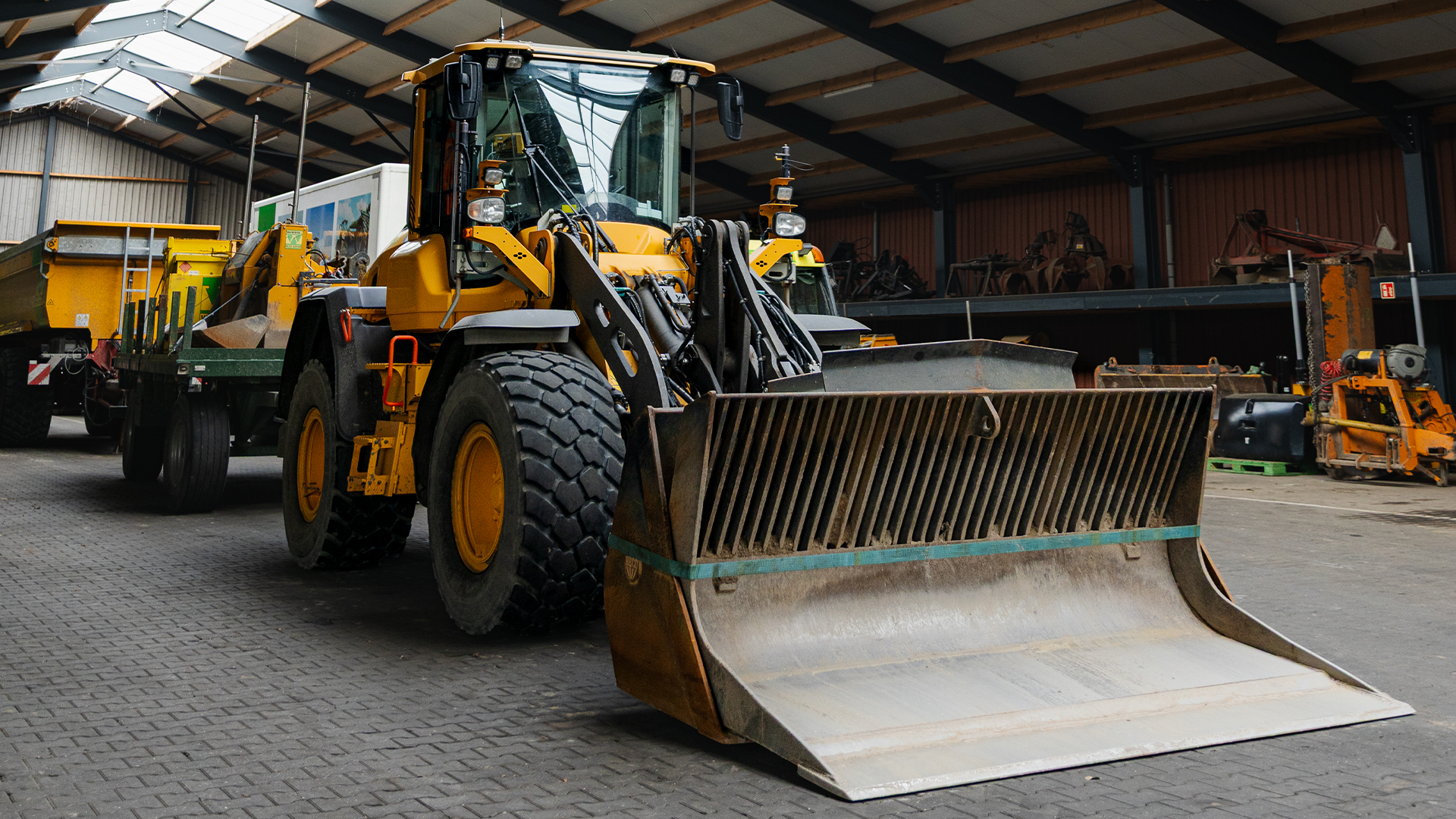
The word supermachine has two meanings. In construction it is mainly an informal nickname. Machine operators and suppliers use it for a heavy earthmoving machine that stands out for its size and power, such as a large crawler or wheeled excavator, a loader or a dozer. There is no fixed threshold; it is mainly about machines that stand out.
Topsector Logistiek uses the term more precisely. There it is not about size, but about the type and amount of data the machine collects. A supermachine is fitted with sensors that go beyond the usual data on fuel consumption and operating hours: they measure the actual nitrogen emissions directly at the exhaust and transmit them. These sensors sit in the exhaust and the air intake, and this direct measurement of nitrogen at the source is called measuring at the pipe.
The term supermachine comes from the “Meten aan de pijp” project, part of the Meetprogramma Mobiele Werktuigen & Bouwlogistiek (Measurement Programme for Mobile Machinery & Construction Logistics) set up by Connekt and Topsector Logistiek. That measurement programme falls under Schoon en Emissieloos Bouwen (Clean and Emission-free Construction), the Dutch central government programme (Ministries BZK and I&W) to make the construction sector cleaner.
Why are supermachines measured?
The trigger is nitrogen. Many construction projects near a Natura 2000 area get held up by the nitrogen rules: you have to demonstrate in advance how much nitrogen your project deposits on protected nature. That calculation relies on TNO’s national calculation method. This method was largely based on assumptions, and those assumptions were generally chosen conservatively. That led to a structural overestimation of actual nitrogen emissions. Measurements from real-world practice make that estimate more realistic.
Within the measurement programme, this measuring happens at two levels. For hundreds of machines the engine data is read out via the CAN bus, from which the emissions are calculated. For dozens of machines within that group, the supermachines, nitrogen is additionally measured directly at the exhaust. These direct measurements show how much a machine actually emits. They form the reference against which TNO tests the calculation methods and with which the calculation rules have been tightened, so that the calculated emissions of other equipment come closer to real-world practice. GPS-Buddy fitted the equipment: the CAN bus connection on the machines, and on the supermachines the additional sensors in the exhaust as well.
Read more about what the measurements delivered here →.
How do you calculate the emissions of your entire fleet?
You don’t need a sensor in your exhaust for reliable emissions reporting. With Flowter you can easily gain insight into your emissions, with or without a CAN bus.
TNO’s tightened calculation method is built into Flowter’s emissions reporting. For machines with CAN bus data, Flowter automatically calculates the emissions of CO2, NOx and NH3. Machines without usable CAN bus data stay in view: based on operating hours and engine power, Flowter also produces a well-founded estimate for those. This way you can see, per project and period, what your entire vehicle and machine fleet emits.
GPS-Buddy had the IT controls around its emissions and reporting methodology independently assessed in an ISAE 3000 assurance engagement with TÜV NORD Nederland and its partner Diggle BV.
Want to know more about emissions reporting in Flowter?
Request a demo View the solution
This article describes a situation in the Netherlands and is based in part on information from the Meetprogramma Mobiele Werktuigen & Bouwlogistiek, TNO, Schoon en Emissieloos Bouwen and AERIUS. For the most up-to-date information, consult the official sources. Situations can change. No rights can be derived from this article.