

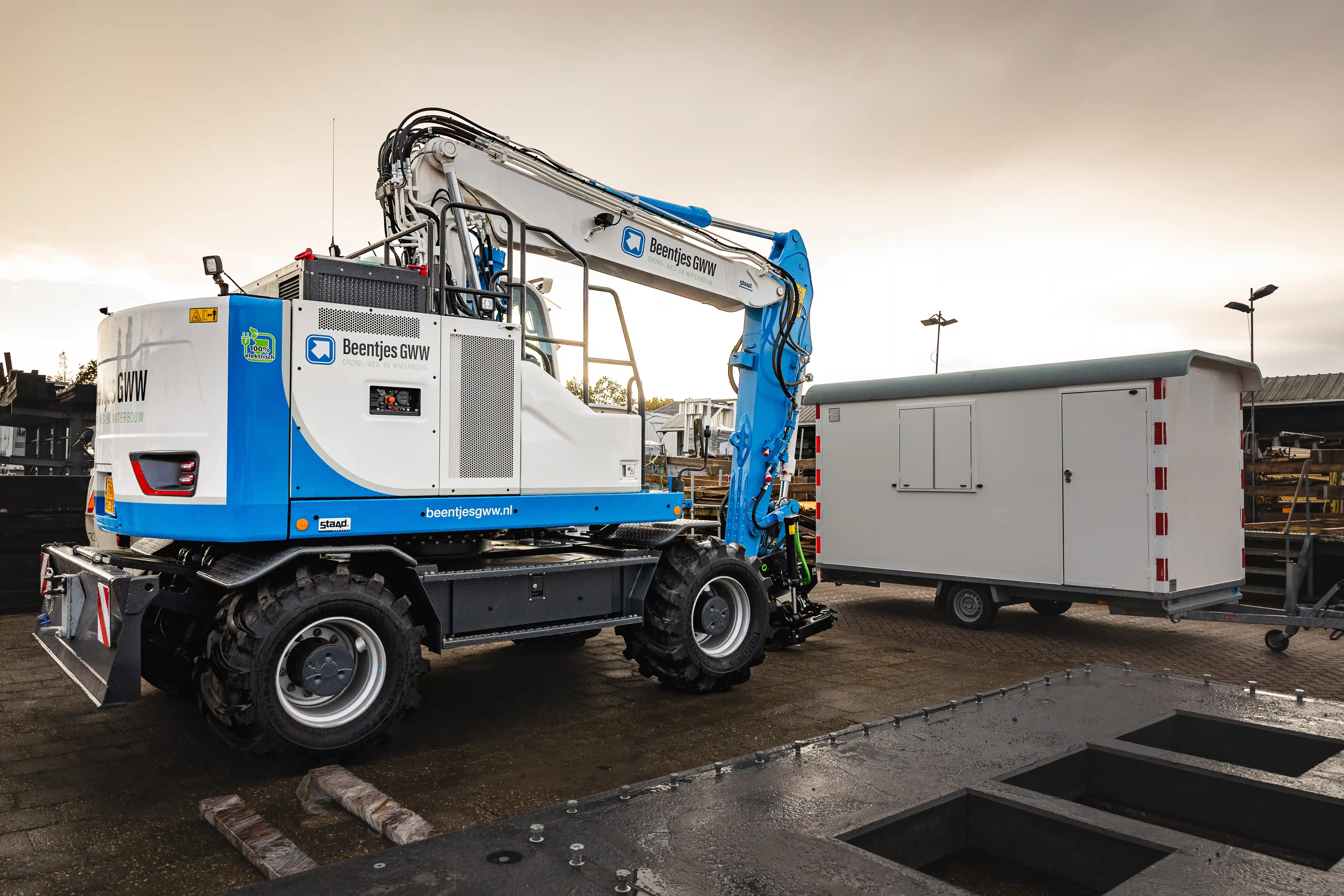
What is AdBlue and what influence does AdBlue have on nitrogen
AdBlue is now used in many vehicles and machines, from passenger cars to trucks and mobile machinery. We explain what AdBlue actually is, what the fluid does, and what role AdBlue plays in calculating nitrogen emissions.
What is AdBlue?
AdBlue is a fluid made up of 32.5% urea and 67.5% demineralised (mineral-free) water. Its composition is fixed in the international ISO 22241 standard, so that every bottle or tank of AdBlue has the same quality anywhere in the world. AdBlue is not a fuel and sits in its own tank, separate from the diesel. The fluid is used in vehicles and machines with a catalyst that converts harmful nitrogen oxides (NOx) in exhaust gases into harmless substances.
How does AdBlue work in the SCR system?
SCR stands for Selective Catalytic Reduction, a system located in the exhaust of a diesel vehicle or machine. The system consists of a catalyst that converts harmful nitrogen oxides (NOx) into harmless substances, just before the exhaust gases leave the vehicle.
AdBlue is injected into the hot exhaust gas stream just before this catalyst. The heat causes the urea to break down into ammonia and carbon dioxide. In the catalyst, this ammonia reacts with the NOx in the exhaust gases, producing two harmless substances: nitrogen (N₂) and water vapour (H₂O). This is the same nitrogen that already makes up the largest share of the air around us.
This reaction works most effectively within a certain temperature window of the exhaust gases, roughly between 200 and 500°C, with the best performance somewhere between 250 and 450°C. The reason lies in the first step of the process: converting urea into ammonia requires heat. At low temperatures, this conversion only happens partially, and some of the AdBlue can even deposit or crystallise. To prevent this, systems deliberately dose less AdBlue at low temperatures, which in turn means less NOx is converted.
This explains why engine load is so decisive for how well the system works. Under heavier load, an engine runs hotter, so the exhaust gases reach the effective temperature window faster and the AdBlue system converts NOx more efficiently. When idling or during short, light use, the engine stays cooler, so conversion lags behind and relatively more NOx is emitted.
Why is AdBlue needed: Euro emission standards
The nitrogen oxides that are emitted are harmful to air quality and health, and through nitrogen deposition also contribute to acidification and over-fertilisation of natural areas. To limit this, the European Union sets emission standards that vehicles and machines must meet.
For trucks, this has been the Euro VI standard since 2013, which significantly lowered the permitted NOx emissions compared to the previous standard. For passenger and light commercial vehicles, the equivalent Euro 6 standard has applied since 2014/2015. For trucks, this standard is in practice almost always met with an SCR system, and therefore with AdBlue. For passenger and light commercial vehicles, some early Euro 6 models still used a different technique without AdBlue, but SCR is now the standard solution here too.
For mobile machinery (construction equipment, agricultural vehicles), comparable requirements apply under the Stage regulations, with Stage V as the current step.
With the arrival of Euro 7, SCR with AdBlue remains the standard technology for meeting NOx limits. New types of passenger and light commercial vehicles must comply from late 2026, and all new passenger and light commercial vehicles from late 2027. For trucks, this applies to new types from mid-2028, and to all new trucks from mid-2029.
AdBlue consumption and nitrogen calculation: the link with AERIUS
As explained earlier, how much AdBlue a machine consumes says something about how much nitrogen (NOx) that machine emits. This relationship is used when calculating nitrogen emissions in AERIUS, the calculation tool used in the Netherlands for permit applications for construction and infrastructure projects under the Environment and Planning Act (Omgevingswet).
Before a project starts, construction and infrastructure companies enter data into AERIUS about the machines that will be used. Based on this, AERIUS produces an estimate of the expected emissions, including nitrogen, for the project.
Anyone who wants to know more about exactly how these calculation methods work, including the differences between the old and new TNO method, can find that in the article on the new TNO method for nitrogen calculation.
Difference between vehicle types
AdBlue systems are found in different vehicle and machine types, with clear differences in scale:
- Passenger cars and light commercial vehicles: smaller AdBlue tank (typically 11 to 25 litres), consumption in the range of a few litres per 1,000 kilometres.
- Trucks: larger tanks and higher consumption, linked to heavier engines and longer routes.
- Mobile machinery: consumption is strongly linked to engine load and operating hours rather than distance travelled, which also forms the basis for the calculation method described above under AERIUS.
Making AdBlue consumption and emissions visible with Flowter
For fleet managers working with diesel vehicles or mobile machinery, insight into AdBlue consumption is therefore not just an operational matter, but also relates to how nitrogen emissions are calculated and reported. Flowter records fuel consumption and operating hours per vehicle or machine via the CAN bus connection. Even without a CAN bus connection, Flowter calculates emissions based on operating hours, meaning all vehicles and machines can be included in emissions reporting.
Want to know more about our solution?
This article describes the situation in the Netherlands based on the standards and calculation methods in effect at the time of writing (August 2026). Regulations regarding emission standards and nitrogen calculation may change; if in doubt, consult the current documentation from RIVM/AERIUS or TNO.