

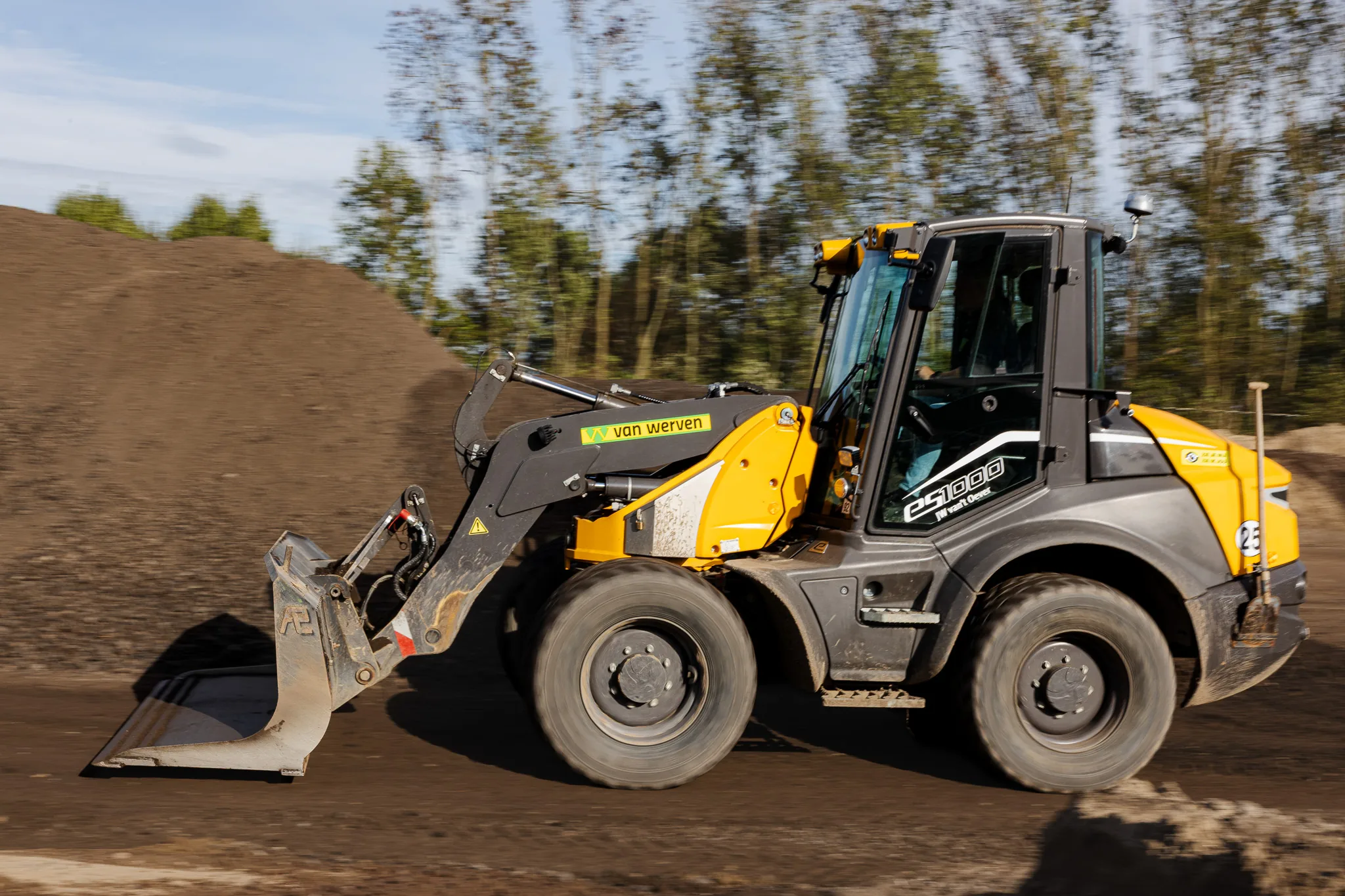
AERIUS explained: what the tool does and what changes in 2026
If you build close to a Natura 2000 site, an obligation applies: before you receive a permit, you have to calculate and substantiate the nitrogen emissions of your project. You do this in AERIUS, but the calculation method behind that tool does not stand still. In this article we explain what AERIUS exists for, what role TNO plays, and when the tool will change again in the near future.
What is AERIUS?
AERIUS is the calculation tool that you, as a project developer or contractor, use to calculate how much nitrogen deposition your construction project causes on protected nature, the so-called Natura 2000 sites. If your project causes nitrogen deposition on a nitrogen-sensitive Natura 2000 site, you must demonstrate before the start of your project that significant effects on that nature can be ruled out. Without that substantiation you will not receive a permit. Because many of these nature areas are already heavily burdened, even a small increase can call for additional substantiation or measures. The permitting authority assesses your application with that same tool, so that you and the government work with the same calculation rules.
Emissions and deposition: what exactly does AERIUS calculate?
First the tool determines the emission: how much nitrogen (NOx and NH3) a source emits, for example an excavator or a truck. The tool then calculates the deposition: how much of those emissions ultimately settles on a nature area.
The emission side relies on figures and methods from TNO. On the deposition side, the RIVM calculates using the OPS dispersion model, which, based on factors such as the weather and wind direction, calculates where the emitted nitrogen ultimately settles. For road traffic, AERIUS also uses a separate calculation method, SRM2, specifically intended for the dispersion of emissions along roads. So when it comes to an adjustment of “the TNO method”, it concerns the emission side: the estimate of what comes out of the exhaust.
What is TNO's role in the development of the AERIUS tool?
AERIUS is developed and managed by the RIVM on behalf of the Ministry of Infrastructure and Water Management. For the emission figures, the RIVM calls on TNO: an independent research organisation that supports the government in numerous fields, from energy to mobility, with applied scientific research. TNO develops the calculation methods used to determine a source's nitrogen emissions, and supplies the resulting emission factors to AERIUS, for road traffic, mobile machinery, inland shipping and maritime shipping. For mobile machinery these are the AUB method (AdBlue consumption, hours (“Uren”) and fuel consumption) and the simpler U method. The RIVM processes these figures and then carries out the deposition calculation. So TNO supplies the building blocks at the front end, while the RIVM does the calculating at the back end.
Why does the calculation method change so often?
The calculation method never stands still for long, and this has a number of interrelated causes. New measurements provide ever better insight: in practice, engines do not always achieve the emissions that go with their EU standard on paper, and as soon as measurements give cause to do so, TNO adjusts the figures. On top of that come policy and legislation, such as new EU standards for engines and the transition to the Environment and Planning Act (Omgevingswet). Case law also plays a role: rulings by the Council of State partly determine how you may substantiate your emissions. Moreover, as soon as AERIUS is updated on the basis of such developments, you are required to calculate with that latest version: the Environmental Regulation (Omgevingsregeling) stipulates that outdated figures are not an option. All these developments together mean that AERIUS is usually updated annually, on a fixed rhythm in October.
How has the calculation method for mobile machinery changed in recent years?
The approach for mobile machinery has become more precise in stages. In 2009, AERIUS worked with the EMMA model, which was based mainly on operating hours. In 2021, TNO introduced the AUB method. It links emissions to three real-world data points: AdBlue consumption, operating hours and fuel consumption. The idea behind it: the more heavily an engine is loaded and the better the aftertreatment with AdBlue works, the more accurately you can estimate the actual NOx emissions.
In 2023 the U method was added, a simpler variant for situations where consumption data is missing. It uses two data points: the machine's maximum engine power and the number of operating hours. In the update of 7 October 2025, AERIUS switched to figures per power class instead of per sector for mobile machinery.
When will the AERIUS tool be updated again?
The next update is scheduled for 6 October 2026. For mobile machinery, various NOx key figures will then be revised. The basis for this is the Mobile Machinery & Construction Logistics Measurement Programme (Meetprogramma Mobiele Werktuigen & Bouwlogistiek), which falls under Clean and Emission-free Construction (Schoon en Emissieloos Bouwen). Within that, the ‘Meten aan de Pijp’ (Measuring at the Pipe) project carries out the actual NOx measurements at the exhaust. GPS-Buddy won the tender from Connekt and Topsector Logistiek and carried out the field measurements. On hundreds of machines we recorded fuel consumption, operating hours and engine load via the CAN bus. On dozens of them we placed sensors in the exhaust and the air intake, in order to measure the NOx emissions directly at the exhaust.
These measurements show that, in practice, mobile machinery emits on average around 40 percent less nitrogen than the AUB method predicts using the standard assumption of six percent AdBlue, with outliers up to 90 percent. TNO translated the results into a new calculation method, set out in a manual for calculating NOx emissions (TNO 2026 R10854). This calculation method has become up to 64 percent more accurate. For the construction sector this means more room: projects that previously exceeded the deposition threshold in AERIUS may now remain below it and can go ahead after all.
A concrete example of this refinement lies in the AUB method. It calculates using a machine's AdBlue consumption. If you measure that consumption yourself, you enter the actual figures. In practice, however, AdBlue consumption is by no means always recorded. When that data was missing, a standard percentage of six percent was used until now. In the revised method this is no longer necessary: if the actual consumption is unknown, the AdBlue percentage is derived from the actual engine load, calculated on the basis of fuel consumption, the year of manufacture and the engine power. Depending on that load, this works out at four to seven percent. In this way the calculated NOx emissions better match what a machine actually emits in practice, even when AdBlue consumption has not been measured.
What does this mean for your AERIUS calculation?
The new calculation method may affect your AERIUS calculation. You can read how the new method may have an impact in this article → The old vs new method.
You can easily calculate emission figures for the AERIUS calculation tool, among other things, via Flowter. At the touch of a button, you get an immediate overview of the emission figures for your entire machine and vehicle fleet, per project and per period.
GPS-Buddy has had its IT controls relating to the emission and reporting methodology independently assessed within an ISAE 3000 assurance process, carried out in collaboration between TÜV NORD Nederland and its partner Diggle BV.
Want to know more about emission reporting in Flowter?
View the solution Request a demo
Please note: at the time of writing this article, the RIVM's official substantiation for the 2026 release had not yet been published.
This article describes a situation in the Netherlands and is based in part on public sources from TNO (repository.tno.nl), the RIVM (rivm.nl), AERIUS/BIJ12 (aeriusproducten.nl), the Mobile Machinery & Construction Logistics Measurement Programme (meetprogramma.nl) and Clean and Emission-free Construction (opwegnaarseb.nl). For the most up-to-date information, consult the official sources. Situations may change. No rights can be derived from this article.