

What is fleet management?
For many companies, the fleet is a major cost item. Vans drive to customers and jobs every day, trucks transport goods, and passenger cars are often also used privately. At the same time, more and more rules are being added, such as zero-emission zones, the truck levy and the pseudo final levy (pseudo-eindheffing). That makes managing these vehicles a discipline in its own right.
But what exactly is fleet management? What does it cover? What is the difference with asset management? And how does a fleet management system work? You can read about that here.

20 October 2026
Een content subheading
10 min read
What is fleet management?
Fleet management is the management of an organisation’s company vehicles, from purchase to disposal. It covers all the tasks needed to keep those vehicles available, affordable, safe and compliant. Fleet management is also known as vehicle fleet management or fleet administration.
Strategic and operational fleet management
The tasks within fleet management sit on two levels. The strategic level covers long-term choices: which vehicles are needed, whether they are bought, leased or rented, and when they are replaced. Policy on fuel, electric driving and private use also belongs here. The operational level covers day-to-day practice. Think of planning trips, scheduling maintenance, tracking fuel consumption, supporting drivers and keeping the trip registration in order.
Both levels need insight. How often is a vehicle used, what do the vehicles consume and when is maintenance due? A fleet management system collects this data automatically from the vehicles. That makes decisions better founded, both for today and for the future.
What do we mean by ‘fleet’?
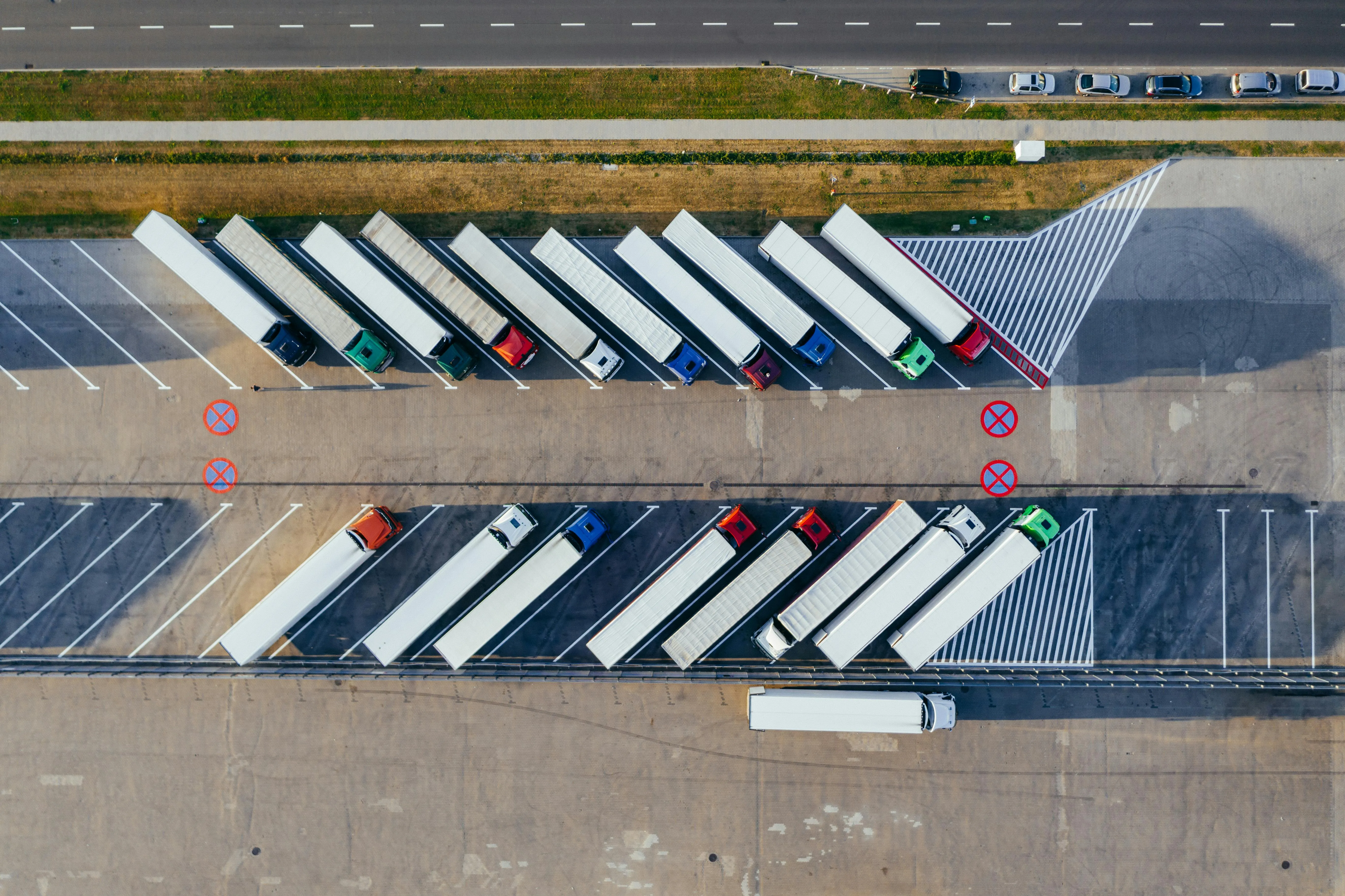
The fleet covers all vehicles a company takes on the road. For an installer, that means vans, for example. For a transport company, it means trucks, tractor units, semi-trailers and trailers, for example. A contractor also has passenger cars and trucks for the supply and removal of materials.
The life cycle of a company vehicle
Fleet management follows a vehicle from start to finish:
- Selection and purchase. Deciding which vehicle is needed, based on use, regulations and total cost of ownership (TCO).
- Commissioning. Registration, equipment, insurance and connection to the fleet management system.
- Use. Planning, assignment to drivers, trips and kilometres.
- Maintenance and inspection. Scheduled maintenance, APK (Dutch periodic vehicle inspection), tyres, damage and faults.
- Evaluation. Kilometres, consumption, costs and reliability per vehicle.
- Replacement or disposal. The point at which continuing to drive costs more than replacing.
Data plays a role in every phase. The better the data, the sharper the decision in the next phase.
Why fleet management is becoming more important
Fleet management has existed for decades. Yet its role is changing fast. Four developments play a major part.
Regulations require demonstrable data
Zero-emission zones, the smart tachograph for lighter commercial vehicles, the truck levy and the pseudo final levy (pseudo-eindheffing) have one thing in common: they require data per vehicle or per trip. That shifts fleet management from cost control to accountability. An estimate is increasingly no longer enough.
Sustainability counts in tenders
In construction and infrastructure, this is a hot topic. Clients in civil engineering, road building and hydraulic engineering reward demonstrable CO₂ reduction. The fuel consumption of the company’s own fleet counts towards this. Anyone who can substantiate that consumption per vehicle stands stronger at the award stage. That makes consumption data a commercial topic.
Costs are under pressure
Drivers are scarce, and company vehicles are expensive to buy and run. Every vehicle that stands idle unnecessarily or drives empty kilometres costs money without earning anything. That makes utilisation at least as important as purchase.
Fleets are becoming more mixed
An average contractor or installer drives several brands, fuel types and vehicle types. Electric vans stand next to diesels, and every manufacturer has its own portal with its own data. That calls for one place where the data of the entire fleet comes together.
What falls under fleet management?
Fleet management touches many different tasks. Areas that belong to fleet management include:
Purchase, lease and replacement
The purchase price is only part of the bill. Fuel, maintenance, insurance, taxes and residual value also determine running costs. Fleet management makes those costs visible per vehicle.
Deployment and planning
Planning starts with the question of which vehicles are available and where they are driving. A current overview of locations and status helps limit empty trips and unnecessary detours. Geofences, virtual zones around a project, customer or depot, show when a vehicle arrives or departs.
Maintenance and availability
Maintenance based on actual kilometres fits usage better than maintenance based on the calendar alone. Fault codes from the CAN bus can give an early signal that something is wrong. That makes the step from reactive to preventive maintenance possible.
Fuel and charging
Fuel is a major cost item for many fleets. Consumption from the CAN bus, linked to fuel card data, shows where differences arise. For electric vehicles, attention shifts to charging moments, charging locations and range.
Drivers and driving behaviour
Driving behaviour affects consumption, wear and safety. Fleet management makes driving style measurable and comparable. Many organisations use that data for coaching, as a basis for a conversation about safe and economical driving.
Trip registration
A complete trip registration is the basis for accounting for private use of the company car to the Dutch Tax Administration (Belastingdienst).
Compliance and reporting
Driving and rest times, tachograph data and CO₂ reports require data that can be verified. Fleet management ensures that this data is available in one place, at the moment a regulator, accountant or client asks for it.
Damage, incidents and theft
Company vehicles and their cargo are vulnerable to theft, especially when they are parked on the street or on a project outside working hours. An alert for movement outside working hours and a reliable location history increase the chance of recovery. In the case of damage or an accident, data from the G-sensor can give insight into what happened.
How does a fleet management system work?
A fleet management system consists of three layers: hardware, firmware and software. The hardware collects the data in the vehicle. The firmware determines which data is read and how it is sent. The software processes the data and makes it visible. The quality of the whole depends on how well those three layers fit together.
Hardware: the source of the data
The data comes from the vehicle itself. This often happens via a tracker or gateway that is fitted afterwards. Location is generally determined via GPS, and the data travels over the mobile network to the software.
If the hardware is connected to the CAN bus, a vehicle’s internal network, more data can be added, such as odometer reading and fuel consumption. Some systems also record driving behaviour, for example with a G-sensor that registers hard braking, acceleration and sharp corners.
Depending on the system, additional hardware can extend the range. Think of a connection to the tachograph, reading out semi-trailers and trailers, or sensors for temperature and tyre pressure.
Firmware: the intelligence in the box
Firmware is the software that runs on the hardware itself. It determines, among other things, which signals are read from the vehicle, how often data is sent and what happens when there is temporarily no mobile coverage. Vehicle brands and types often use different signals on the CAN bus. The firmware ensures that this data is translated correctly.
With many systems, the firmware can be updated remotely. That makes it possible to add support for new vehicle types or functions without a vehicle having to go to the workshop.
Software: from raw data to overview
The software receives the data and converts it into overviews, such as maps, trip overviews, reports and dashboards. Many systems also have an app, with which drivers can view their own trips and alerts. Depending on the settings, the system can send an alert in case of deviations, such as movement outside working hours or a vehicle leaving a geofence. The system shows and signals. The organisation steers.
Through integrations and APIs, data can flow on to other systems, such as ERP and accounting, planning, time registration and fuel cards. That limits double entry and errors between systems.
Laws and regulations for fleet managers in the Netherlands
The rules around company vehicles are changing on several fronts at once in the coming years. Almost every rule requires data per vehicle or per trip. Below are the most important developments for fleets in construction, infrastructure and transport.
Trip registration and private-use addition (bijtelling)
Anyone with a company car who drives fewer than 500 kilometres privately per calendar year pays no private-use addition (bijtelling). This must be demonstrable with a complete trip registration. The Dutch Tax Administration (Belastingdienst) sets requirements for what that registration records per trip, such as date, odometer readings, addresses and the business or private nature of the trip. A registration that comes automatically from the vehicle reduces the risk of gaps and errors.
Pseudo final levy (pseudo-eindheffing) from 2027
From 1 January 2027, the employer pays a pseudo final levy (pseudo-eindheffing) of 12 percent of the list price on fossil and hybrid passenger cars that are also available for private use. Fully electric cars and hydrogen cars are exempt. The levy comes on top of the employee’s private-use addition (bijtelling). Commuting counts as private use, and the usual limit of 500 kilometres does not apply here.
The levy can be avoided per vehicle if the car is used exclusively for business. This requires a complete trip registration, supplemented by demonstrable supervision of that business use. For cars that were already available before 2027, a transitional arrangement applies. Vans are not subject to the pseudo final levy.
Zero-emission zones for city logistics
More and more municipalities have a zero-emission zone for vans and trucks. Insight into which vehicles drive in which zones helps decide which vehicles are replaced first or deployed differently.
Smart tachograph for lighter commercial vehicles
Since 1 July 2026, a second-generation smart tachograph is mandatory for commercial vehicles above 2,500 kilograms maximum permissible mass in international road haulage and cabotage. This means heavier vans also fall under the rules on driving and rest times. An exception applies to own-account transport where driving is not the driver’s main activity.
Truck levy
Since 1 July 2026, trucks above 3,500 kilograms in the Netherlands pay a levy per kilometre driven on designated roads. The rate depends on the weight and CO₂ emission class of the vehicle. Motor vehicle tax for trucks goes down at the same time. This makes transport costs more variable, and makes kilometre data per trip and per job more important for post-calculation.
Reporting on work-related personal mobility
Employers with 100 or more employees report annually on the CO₂ emissions of business travel and commuting by their staff. The report for a calendar year must be submitted before 30 June of the following year. There is a proposal to raise the threshold to 250 employees. Kilometres driven and fuel type per vehicle form the basis of this reporting.
CO₂ Performance Ladder (CO₂-Prestatieladder)
The CO₂ Performance Ladder (CO₂-Prestatieladder) is a widely used award instrument in civil engineering, road building and hydraulic engineering. The fuel consumption of the company’s own fleet falls under scope 1, an organisation’s direct emissions. A reliable record of that consumption per vehicle is therefore a basis for certification and for reduction targets. The consumption of machines also counts towards scope 1, but that belongs to asset management.
The higher the step on the ladder, the greater the fictitious award advantage in tenders. That makes the fleet’s consumption data directly relevant to a company’s commercial position.
How do you choose a fleet management system?
Choosing a fleet management system starts with your own organisation. A system that works well for a fleet of lease cars does not always suit a company with vans, trucks and equipment that changes location every day. A few questions help to make the right choice.
Define your needs based on the fleet
How many vehicles does an organisation have? Or which vehicles does the organisation have? Of which brands and on which fuel? Who drives them, and what are they used for? A passenger car with private use calls for different functions than a truck with a tachograph. The clearer that picture is beforehand, the easier it becomes to compare systems.
Define which data you need
Location and trips often form the basis. In addition, data such as odometer reading, fuel consumption and driving behaviour may be needed. Which data a system can read differs per system and per vehicle. That makes it wise to check beforehand which data is actually available for your own fleet.
Look at regulations and reporting
A system must fit the obligations that apply to the fleet. Think of a complete trip registration, downloading tachograph data and CO₂ reports for the CO₂ Performance Ladder or the mobility reporting. A trip registration with a quality mark gives extra certainty towards the Dutch Tax Administration (Belastingdienst).
Think beyond the fleet
For many companies, the work consists of more than vehicles alone. Think of trailers, generators, site cabins, plate compactors and tools. Much of that equipment has no power supply of its own, and therefore often stays out of sight.
Yet that equipment can be made visible too. Anyone who also looks at these possibilities when choosing a fleet management system avoids fleet and equipment ending up in separate systems. That gives one overview of all company assets, in one environment. This is where fleet management turns into asset management, and the basis for asset intelligence emerges.
Use and support
A system only works when it is used. Clear dashboards and good support during implementation make the difference. A pilot with part of the fleet quickly shows whether a system fits in practice.
What does fleet management deliver?
Fleet management shows how the fleet is used. On that basis, an organisation can adjust in a targeted way. The benefits lie in six areas.
- Overview. One current picture of where vehicles are driving, who is driving them and what they are doing.
- Better utilisation. Fewer empty kilometres, less detouring and fewer vehicles standing idle unnecessarily.
- Lower costs. Insight into consumption, idling and driving behaviour makes savings on fuel and wear possible.
- Higher availability. Maintenance based on actual kilometres prevents unexpected downtime.
- Demonstrable compliance. Trips, driving and rest times and consumption are recorded and can be retrieved.
- Less administration. Data comes automatically from the vehicles and flows on to other systems.
From fleet management to complete Asset Intelligence
GPS-Buddy develops its own hardware, its own firmware and the Flowter platform. GPS-Buddy offers various fleet management solutions. From automated trip registration to Driver Intelligence.
View all solutions on the website
Equipment without a power supply too
Many company assets have no power supply of their own, such as trailers, generators, site cabins and tools. For this, GPS-Buddy has the RFID Asset Tags. A tag runs for up to eight years on one battery, without a GPS module or SIM card, and records usage data such as running hours in addition to location.
The tag sends its data to the nearest gateway. That can be the XT4 in your own vehicle, or one of the tens of thousands of other GPS-Buddy gateways that drive through the Netherlands every day.
For equipment far outside the range of gateways, there is the AT4, a tracker with its own GPS and 4G.
From data to decisions
All data from fleet and assets comes together in Flowter. There it becomes insight: into use, consumption, costs and accountability. On the basis of those insights, the organisation makes decisions. That is the core of Asset Intelligence.
Melanie van den Berg
Online marketeer
Making complex topics easy to understand, and getting my teeth into them first: that's what energises me. In my previous marketing roles, I really enjoyed working with companies in construction, infrastructure and transport. As an online marketer at GPS-Buddy, I like to write about developments in these sectors. I bring the same energy to writing about our own solutions: how they work, and what they deliver in practice for the people who use them. For my articles, I draw on the knowledge of my colleagues and dig into what's happening in the field myself, so that every piece is accurate and complete.